Auction: 12. September 2026
Leica II (“Luxus”), 1932
Starting bid: € 12.000 | Estimate: € 25.000 – 40.000
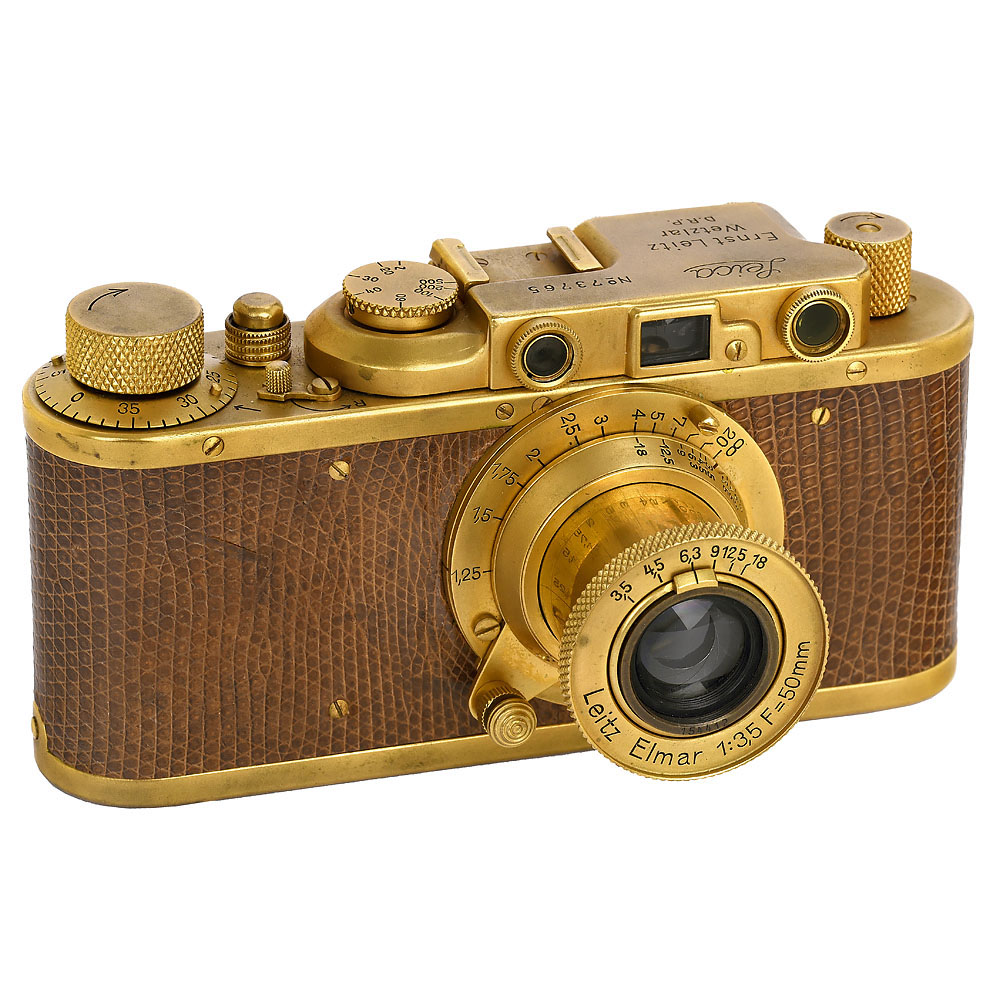
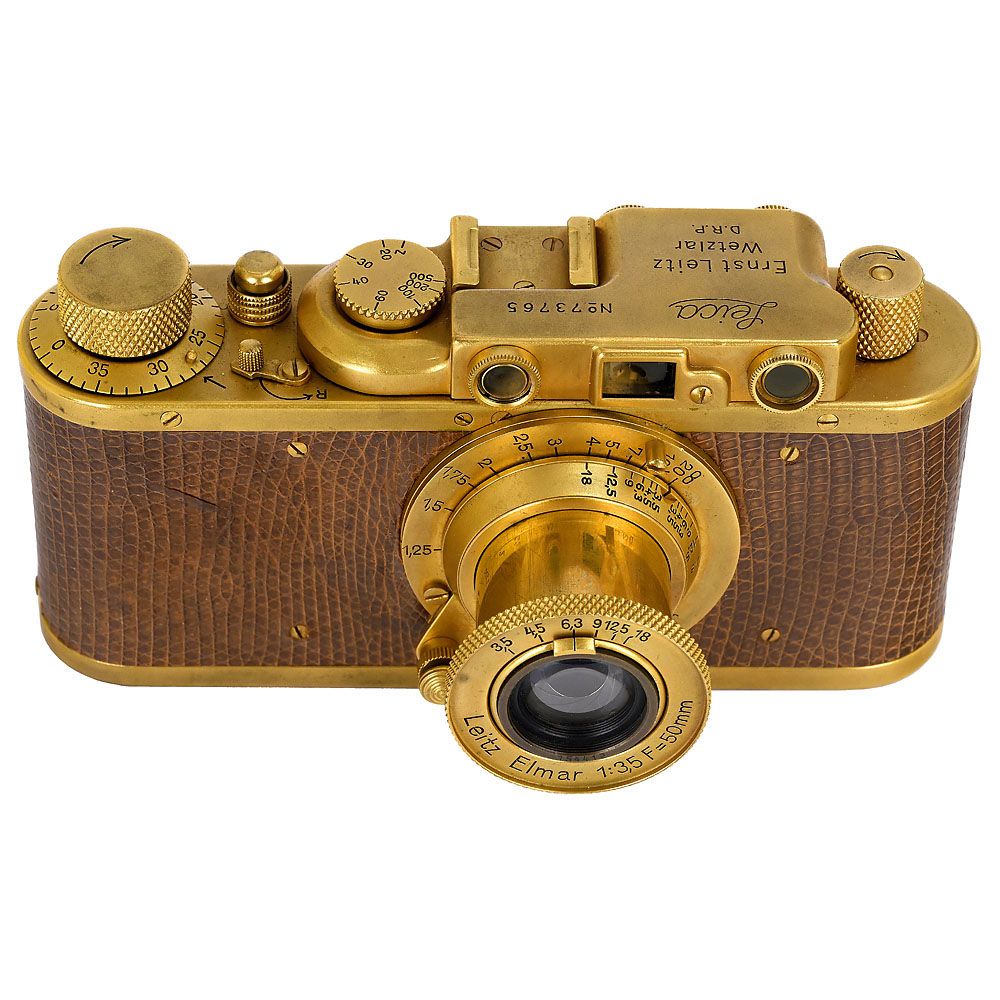
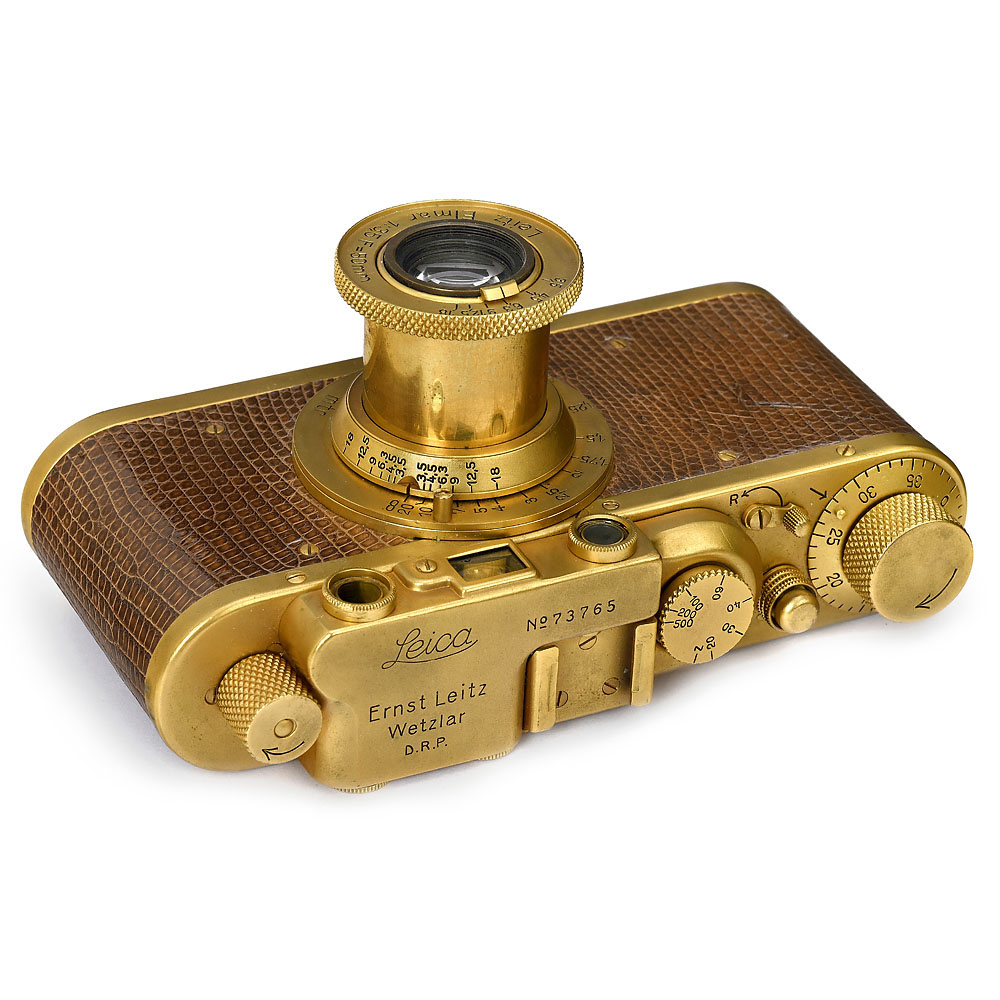
Leitz, Wetzlar. No. 73765, calibrated to “0”, brown snakeskin (the mounting lines are visible on the underside of the lens), the following parts are matte gold-plated: top, base plate, lens, the large adjustment screw on the back, and all screws. Elmar 3.5/50 mm No. 154412, a “0” engraved on the focusing lever, viewfinder lens with two small scratches on the front, shutter functions, rangefinder is accurate (coarser dust around the clearly visible wedge in the viewfinder). Regarding the chemistry of the gold plating: The initial gold plating for the Leica Ic at Leitz was presumably done in-house; they did not use the proven, smudge-proof electroplating of the jewelry industry. If you see original Leitz gold plating on an Ic Luxus, the pleasant matte finish (if well preserved) is noticeable, but it is sensitive to touch (due to protein compounds in the perspiration of certain individuals – see unsold Leica II Luxus in auction images). After 1932, Leitz discontinued gilding after a few Leica II cameras were produced. However, there was a “luxury” problem with later special editions for celebrities, and it wasn’t until later that sufficient smudge-proof gilding became available. Gilding from outside Leitz is also known from the post-war period. The base plate shows strong brown discoloration without any signs of abrasion, suggesting decades of resting on a wooden board. Forensic trace analysis could provide more precise information about the location and date of the gilding. A historical note on gold and photography: There is something significantly positive for photography about protein-sensitive gold dust of molecular nano-size – the Koslowsky effect, which increased sensitivity in gelatin for film, dates back to 1936 and enabled Agfa to achieve its global market dominance until 1945. And it gave Leica users better photos.
Leica II (“Luxus”), 1932
Leitz, Wetzlar. Nr. 73765, auf “0” abgestimmt, braunes Schlangenleder (an der Optikunterseite sind die Montagelinien erkennbar), mattvergoldet sind: Oberteil, Bodenplatte, Optik, an der Rückwand die große Justierschraube sowie alle Schrauben. Elmar 3,5/50 mm Nr. 154412, an Fokussierhebel eine “0” graviert, Sucherlinse vorne mit 2 kleinen Kratzern, Verschluß läuft, Entfernungsmesser stimmt (im Sucher um den gut erkennbaren Schnittkeil gröberer Staub). Zur Chemie der Vergoldung: Die erstmaligen Vergoldungen zur Leica Ic bei Leitz waren vermutlich hauseigene Galvaniken, auf bewährte wischfeste Galvanik der Schmuckindustrie wurde nicht zurückgegriffen. Sieht man eine original Leitz-Vergoldung an einer Ic Luxus, fällt die angenehme Mattierung (sofern gut erhalten) auf, doch ist sie berührungsempfindlich (Eiweißverbindungen im Handschweiß bestimmter Personen – siehe unverkaufte Leica II Luxus aus Auktions-Abbildungen). Nach 1932 wurden Vergoldungen bei Leitz nach sehr wenigen Leica II eingestellt, doch gab es ein “Luxus”-Problem für spätere Sondernummern an Prominente und erst später kamen genügend wischfeste Vergoldungen auf, auch sind aus der Nachkriegszeit Vergoldungen außerhalb Leitz bekannt. Die Bodenplatte zeigt starke braune Verfärbungen ohne Abrieb auf, vermutet wird ein jahrzehntelanges Ruhen auf einem Holzbrett. Ein mehr an Festlegung zu Ort und Zeit der Vergoldung könnte eine Spurenanalytik aus der Forensik erbringen. Ein historischer Hinweis zu Gold und Photographie: Es gibt etwas bedeutend Positives am eiweißempfindlichen Gold-Staub molekularer Nano-Größe – in die Zeit von 1936 fällt der empfindlichkeitssteigernde Koslowsky-Effekt in der Film-Gelatine, der bis 1945 der Agfa ihre Weltmarktgeltung ermöglichte. Und den Leica-Anwendern bessere Photos.