Auction: 14. March 2026
Mars Spaceflight Lens 2/200 mm with optical Light Amplifier
Starting bid: € 6.000 | Estimate: € 9.000 – 14.000
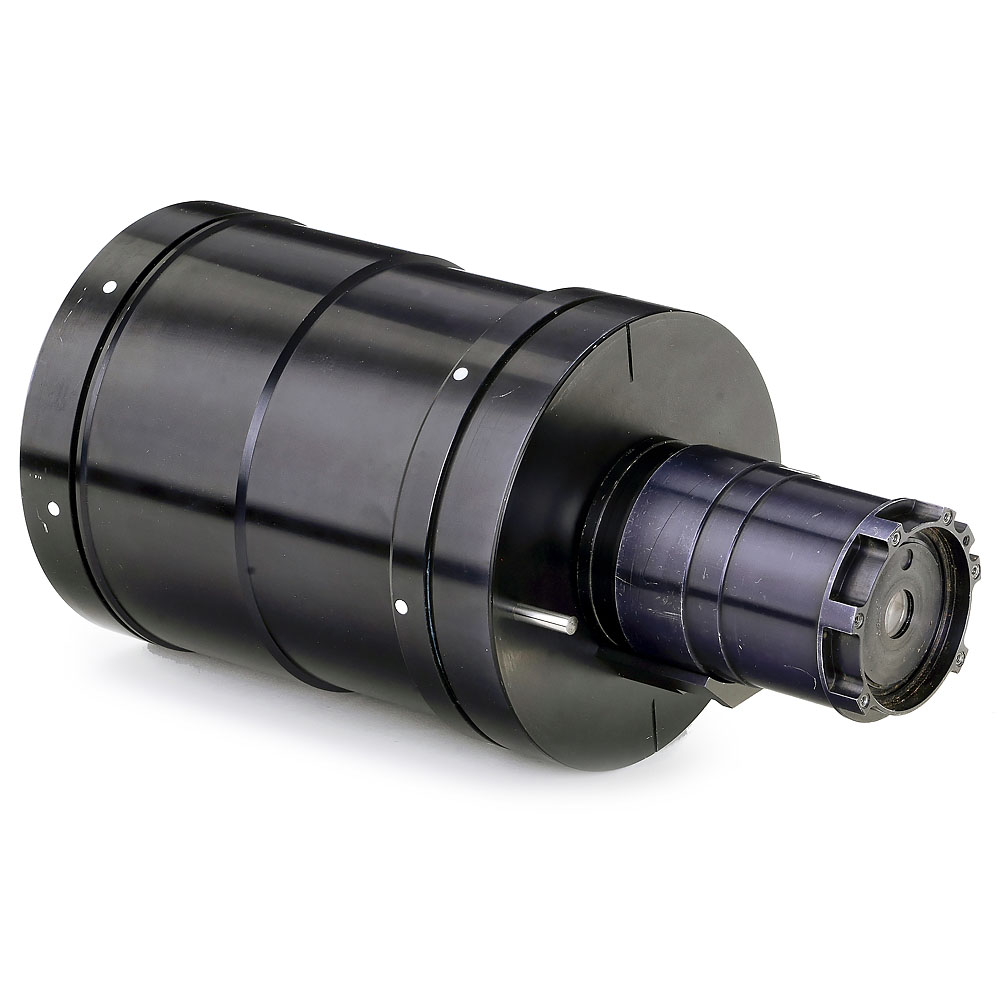
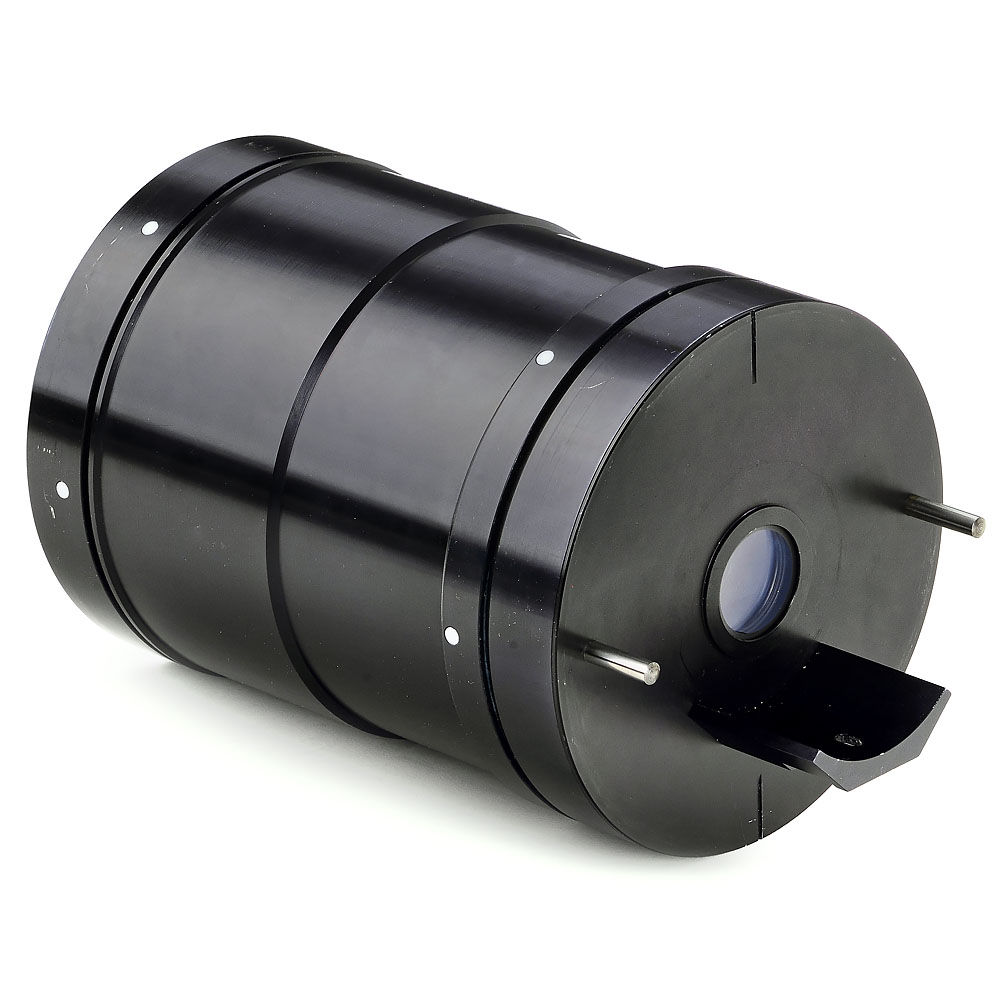
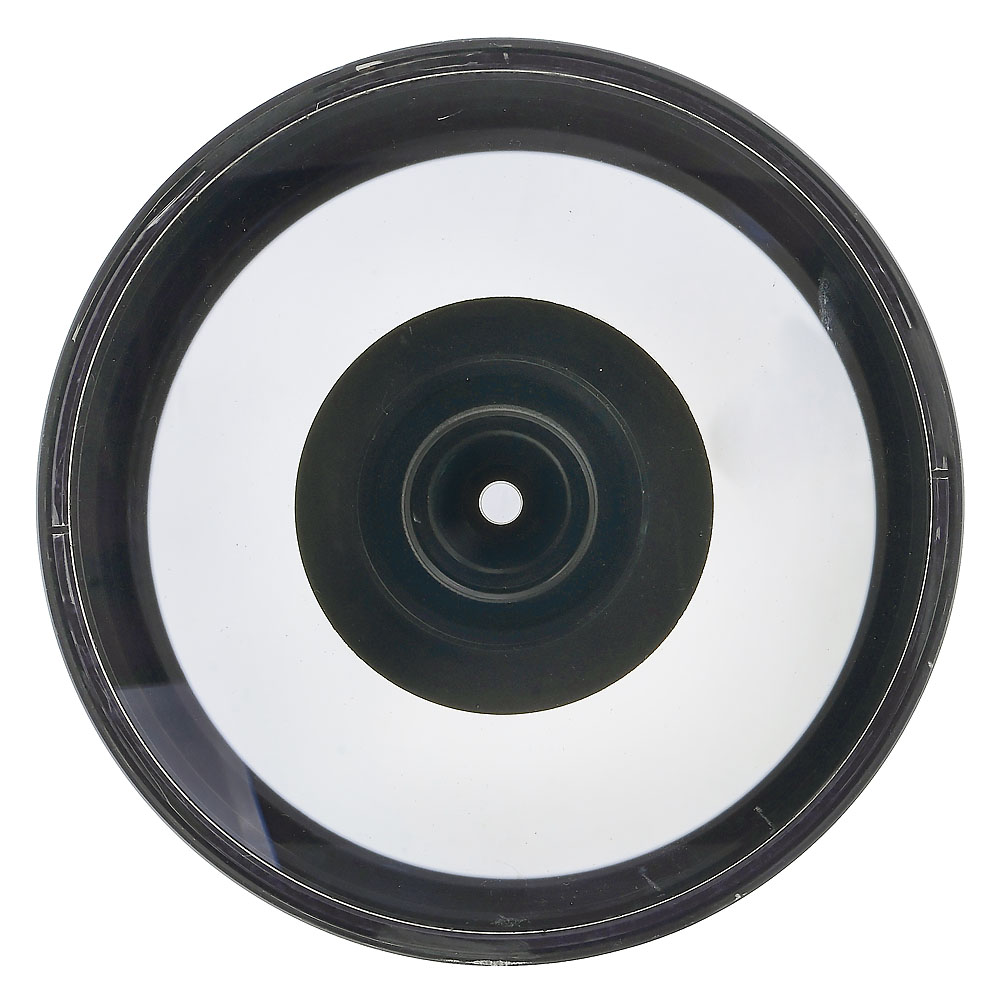
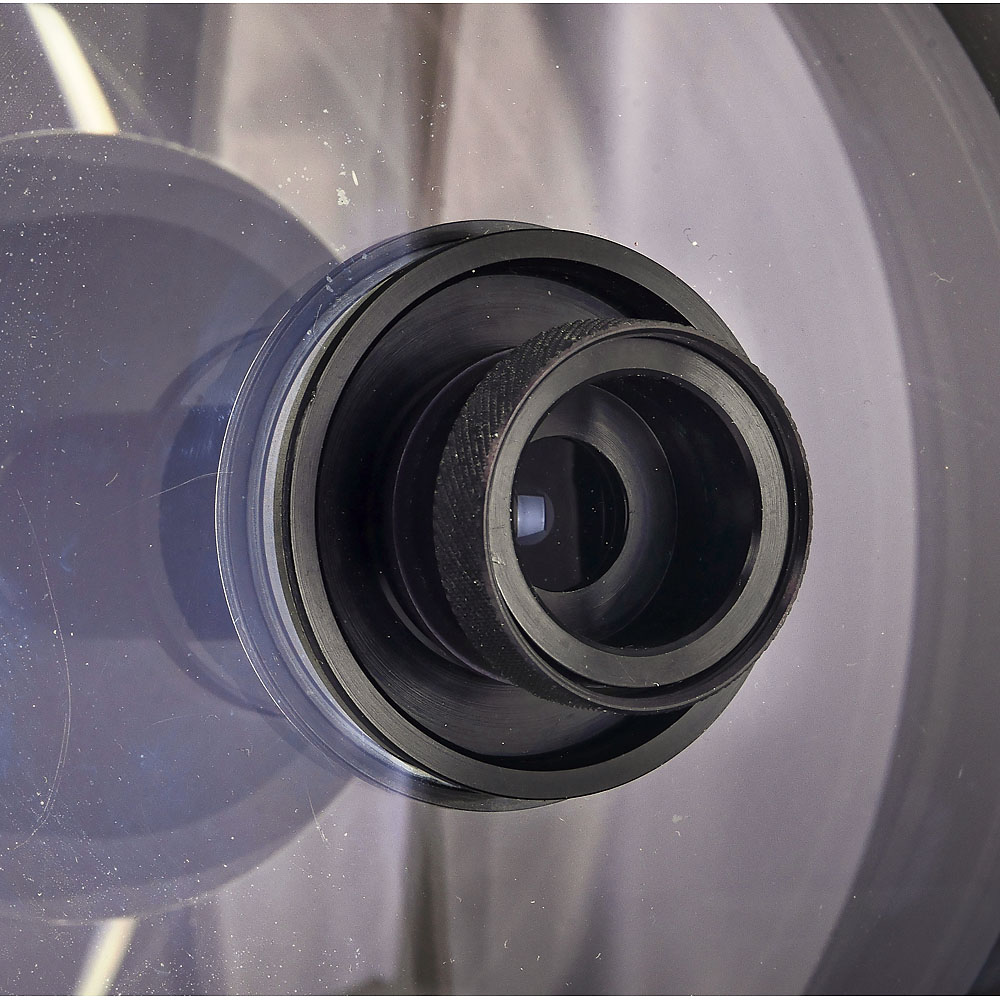
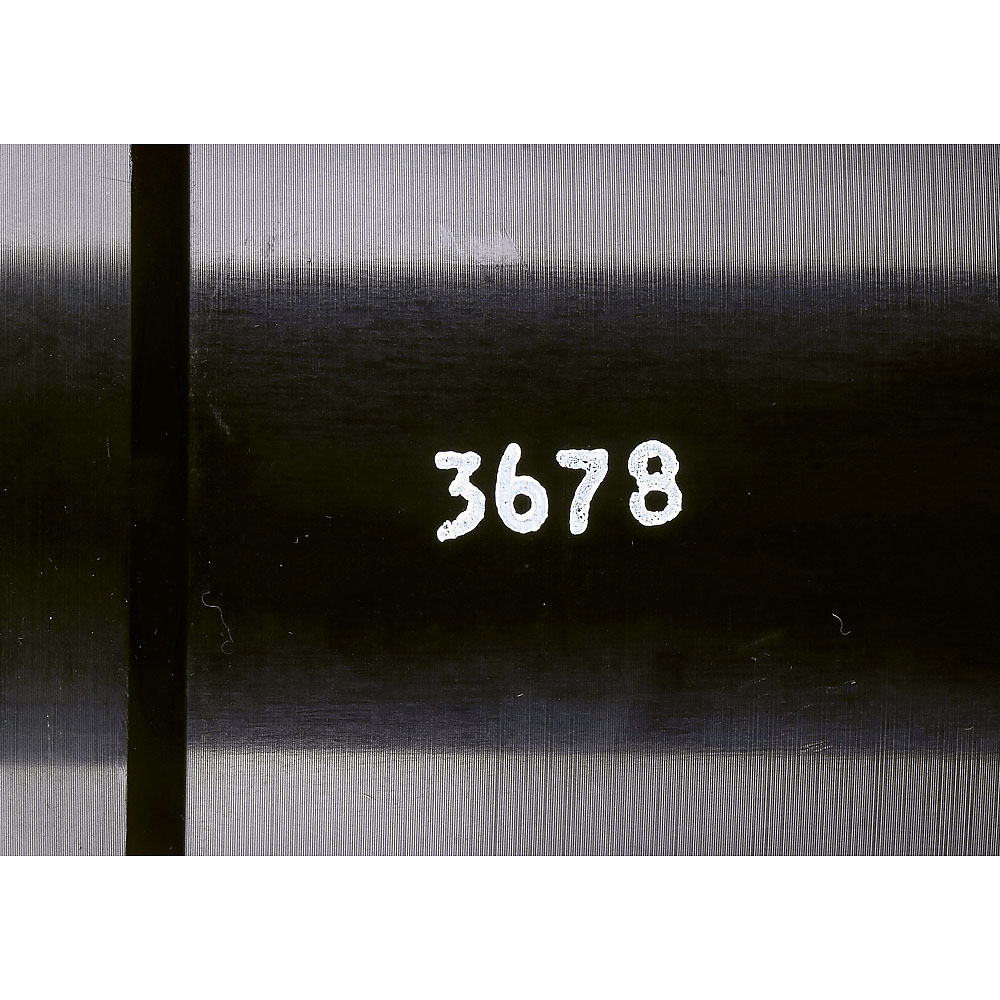
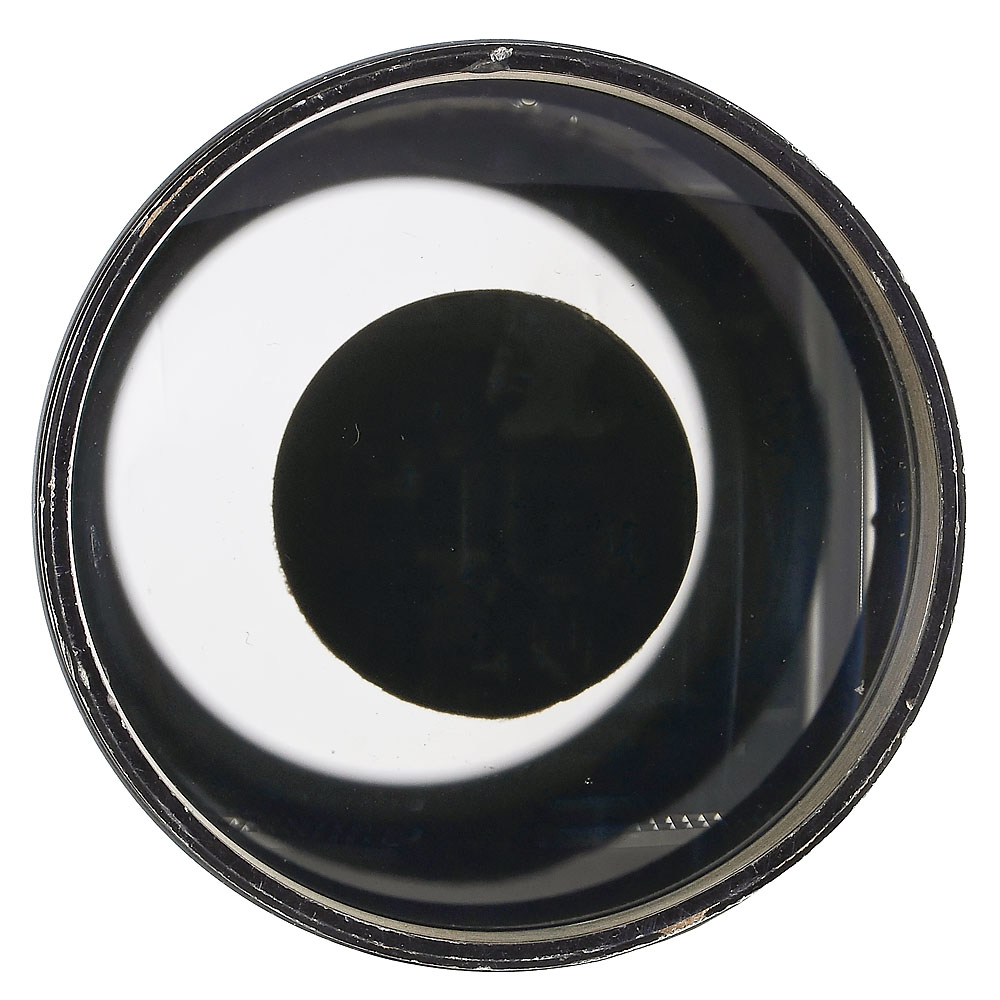
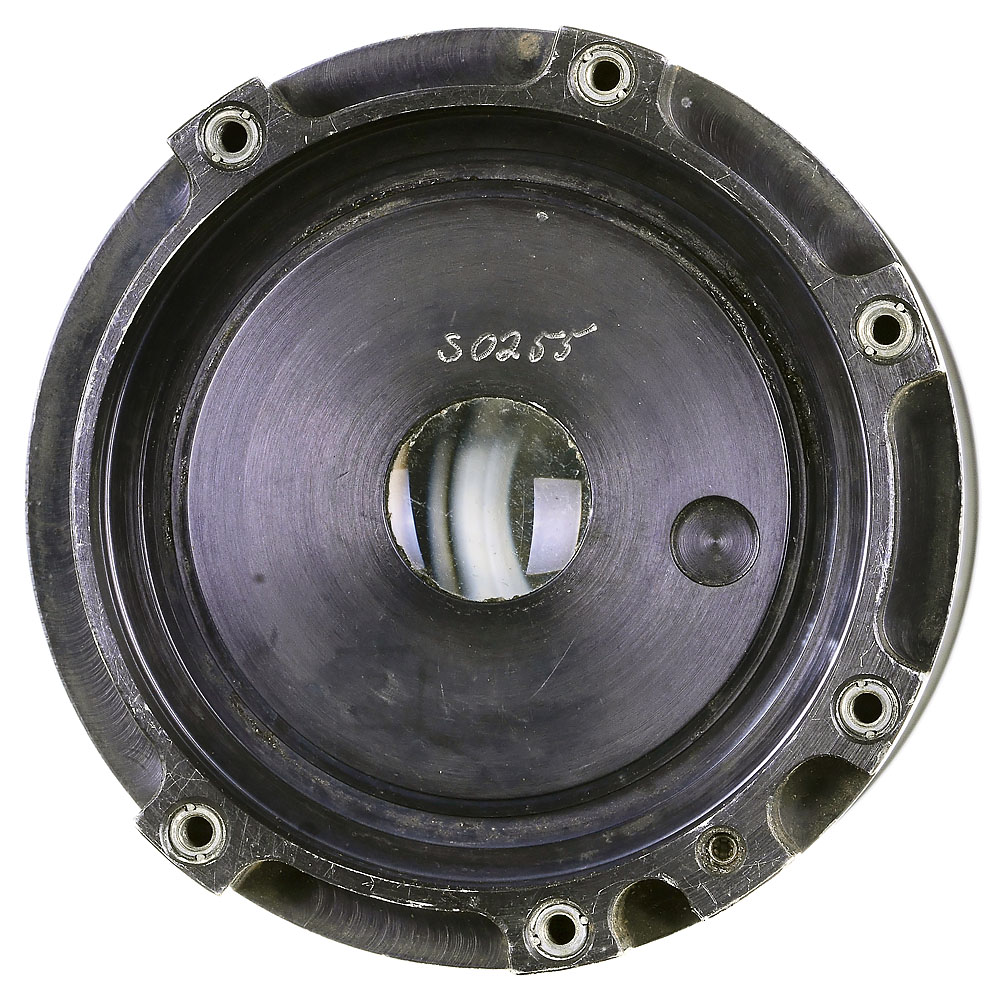
USSR. Lightweight mirror optics No. 3678, weighing 2.88 kg, designed for spaceflight conditions of the 1980s, without any engraving. Image circle diameter c. 26 mm, distance from sensor to last glass surface c. 4 mm. High sharpness in the point image, free of chromatic aberration, even at close range. Diameter of the front lens only: 142 mm, containing a 47.5 mm cover with an internal auxiliary lens of 12.5 mm diameter. This auxiliary lens does not have a focal length; it serves to increase light sensitivity. Length with mounting back: 25 cm. A loose additional mirror lens of c. 1.4/5 cm fits rotationally symmetrically into this quarter-shell mount. This lens alone (front lens only: c. 65 mm, cover c. 30 mm) has an image circle of c. 15 mm, its distance to infinity is c. 1-2 mm, point image sharpness is good and without chromatic aberration. It is assumed that this was a system lens – the 2/200 mm alone for photographing a very dark object, where the surrounding starlight could brighten thanks the auxiliary lens the shadows as background noise thanks to the auxiliary lens (for example, the albedo of Phobos is only 4%, and presumably a front aperture was intended for dimming this auxiliary optic; a thread for this is present). The additional interchangeable mirror lens would have served for spectral imaging with its own sensor. The main optic is in very good condition (2-/2-), the auxiliary optic shows signs of use (3/3). Both lenses (strictly speaking three) clean under point light. Unknown lens of the Soviet Union, probably a prototype.
Mars-Raumfahrt Optik 2/200 mm mit optischem Licht-Verstärker
UdSSR. Leichte Spiegeloptik Nr. 3678 von 2,88 kg für Raumfahrt-Bedingungen der 80er Jahre ohne jede Gravur, Bildkreisdurchmesser etwa 26 mm, Abstand Sensor-letzte Glasfläche etwa 4 mm, im Punktbild hohe farbsaumfreie Schärfe auch im Nahbereich. Durchmesser nur Glas der Frontlinse 142 mm, darin die Abdeckung von 47,5 mm mit innenliegender Hilfsoptik von 12,5 mm Durchmesser, diese Hilfsoptik zeigt keine Brennweite auf, sie dient zur Verstärkung der Lichtempfindlichkeit. Länge mit Auflagerückteil 25 cm, in diese Auflage als Viertelschale passt rotationssymmetrisch ein loses weiteres Spiegelobjektiv von etwa 1,4/5 cm, diese Optik alleine (Frontlinse nur Glas etwa 65 mm, Abdeckung etwa 30 mm) hat einen Bildkreis von etwa 15 mm, der Abstand zu unendlich sind etwa 1-2 mm, Punktbildschärfe gut und ohne Farbfehler. Angenommen wird eine Systemoptik – das 2/200 mm alleine für Photographie eines sehr dunklen Objekts, wo das umgebende Sternenlicht als Hintergrundrauschen mittels der Hilfsoptik die Schatten aufhellen kann (so beträgt etwa die Albedo von Phobos nur 4 % und vermutlich war zur Dimmung an diese Hilfsoptik eine Frontblende vorgesehen, ein Gewinde dafür liegt vor). Das zusätzlich einwechselbare Spiegelobjektiv wird für den Bereich einer Spektralaufnahme mit eigenem Sensor gedient haben. Hauptoptik sehr gut erhalten, (2-/2-), die Zusatzoptik mit Gebrauchsspuren. (3/3) Beide Optiken (eigentlich drei) sauber unter Punktlicht. Unbekannte Optik der Sowjetunion, vermutlich ein Prototyp.